
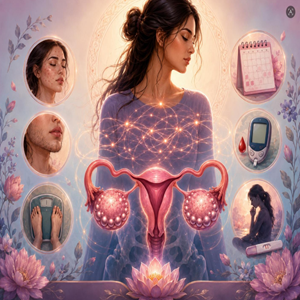
PCOS/PMOS
PCOS, or polycystic ovary syndrome, is a common hormonal condition in girls and women. It can cause irregular or delayed periods, excess facial or body hair, acne, oily skin, scalp hair thinning, weight gain, or difficulty losing weight. PCOS is often linked to insulin resistance, which means the body has difficulty using insulin properly. This can increase the risk of prediabetes, diabetes, fatty liver, high cholesterol, high BP, and fertility problems. PCOS can also occur in lean women.
Diagnosis is based on symptoms, blood tests, and sometimes ultrasound. Tests may include testosterone, DHEAS, thyroid, prolactin, sugar, insulin resistance markers, and cholesterol. Ultrasound showing “polycystic ovaries” alone does not always mean PCOS, especially in teenagers. Other conditions such as thyroid disease, high prolactin, adrenal hormone problems, or Cushing’s syndrome may sometimes look like PCOS and should be ruled out when needed.
PCOS cannot always be “cured permanently,” but it can be controlled very well. Lifestyle changes, healthy diet, regular exercise, strength training, weight loss when needed, and good sleep can improve periods, insulin resistance, skin symptoms, and fertility. Even modest weight loss can help many women. Medicines such as metformin, hormonal tablets, acne or hair-growth treatments, fertility medicines, and GLP-1 medicines in selected women with obesity may be used depending on the main problem. With proper evaluation, treatment, and regular follow-up, most women with PCOS can have regular cycles, better metabolic health, and successful pregnancy when desired.

Galactorrhea
Galactorrhea means milk-like discharge from the breast when a woman is not pregnant or breastfeeding. It can also rarely occur in men. The most common reason is high prolactin, a hormone made by the pituitary gland. High prolactin may happen due to a small pituitary tumor called prolactinoma, thyroid problems, pregnancy, stress, repeated breast stimulation, kidney disease, PCOS, or certain medicines such as antipsychotics, antidepressants, nausea medicines, acidity medicines, or some BP medicines.
Galactorrhea may be associated with irregular or absent periods, infertility, low sexual desire, or low testosterone in men. Evaluation usually includes prolactin, TSH, pregnancy test, kidney function, and sometimes other hormone tests. If prolactin is mildly high, it may need to be repeated, because stress, sleep, exercise, or breast checking can temporarily increase prolactin. Pituitary MRI is advised when prolactin is significantly high or prolactinoma is suspected.
Treatment depends on the cause. Thyroid treatment, changing the causative medicine, or medicines like cabergoline or bromocriptine may help when prolactin is high. Patients should avoid repeatedly squeezing the breast to check discharge, as this can worsen the problem. Bloody, foul-smelling, single-sided, or spontaneous breast discharge should be evaluated by a breast specialist. With proper diagnosis and treatment, galactorrhea, periods, fertility, and hormone health often improve.

Hirsutism
Hirsutism means excess coarse hair growth in women in areas where hair is usually seen more in men, such as the upper lip, chin, chest, abdomen, back, or thighs. It is often due to excess male-type hormones called androgens or increased sensitivity of hair follicles to these hormones. The most common cause is PCOS, but hirsutism can also occur in lean women and may rarely be due to adrenal gland problems, congenital adrenal hyperplasia, Cushing’s syndrome, ovarian or adrenal tumors, thyroid problems, high prolactin, or certain medicines.
Hirsutism may be associated with acne, oily skin, scalp hair thinning, irregular periods, weight gain, insulin resistance, or fertility problems. Warning signs such as sudden onset, rapid worsening, deepening of voice, severe acne, male-pattern baldness, increased muscle mass, or clitoromegaly need urgent evaluation. Tests may include testosterone, DHEAS, 17-hydroxyprogesterone, thyroid, prolactin, sugar, insulin resistance markers, cholesterol, pelvic ultrasound, and adrenal imaging when needed.
Treatment depends on the cause. In PCOS-related hirsutism, weight control, healthy diet, exercise, and treatment of insulin resistance may help. Medicines such as hormonal tablets or anti-androgens like spironolactone may be used in selected patients, but pregnancy should be avoided while taking anti-androgens. Hair growth improves slowly, usually over 6–12 months. Laser hair reduction or electrolysis can be combined with medical treatment for better cosmetic results. Shaving or threading does not worsen hirsutism. With proper diagnosis and regular follow-up, hirsutism can be controlled effectively.

Gynecomastia
Gynecomastia means enlargement of breast gland tissue in boys or men. It is different from chest fat due to obesity, though both can occur together. Gynecomastia is common during puberty and often settles on its own, but it can also occur in adult men due to hormone imbalance, low testosterone, increased estrogen effect, high prolactin, thyroid disease, liver or kidney disease, testicular problems, obesity, alcohol, recreational drugs, or certain medicines such as spironolactone, finasteride, anti-androgens, anabolic steroids, antidepressants, acidity medicines, and some heart medicines. It may cause breast swelling, pain, tenderness, or emotional distress. Most cases are not dangerous, but warning signs such as a hard one-sided lump, nipple discharge, skin changes, nipple pulling, or enlarged armpit glands need urgent evaluation. Tests may include testosterone, LH, FSH, estradiol, prolactin, thyroid, liver, kidney, and hCG tests, and sometimes breast or testicular ultrasound. Treatment depends on the cause and duration. Reassurance may be enough in puberty-related cases, while stopping the causative medicine, weight loss, or treating hormone problems may help others. Medicines may help in recent or painful gynecomastia, but long-standing gynecomastia may become firm and less responsive. Surgery is considered when gynecomastia is persistent, severe, painful, or causing significant cosmetic or emotional concern. With proper evaluation and treatment, gynecomastia can often be managed safely and effectively.

Erectile Dysfunction
Erectile dysfunction means difficulty in getting or maintaining an erection firm enough for satisfactory sexual activity. It is common and should not be considered only a sexual problem, because it can sometimes be an early warning sign of diabetes, high BP, cholesterol problems, obesity, low testosterone, heart disease, thyroid disease, high prolactin, stress, anxiety, depression, poor sleep, alcohol, smoking, or medicine side effects.
Evaluation may include checking BP, sugar levels, HbA1c, cholesterol, morning testosterone, prolactin, thyroid tests, and other tests when needed. In men with infertility, semen analysis may also be advised. Improving diabetes control, reducing weight, regular exercise, stopping smoking, reducing alcohol, better sleep, and managing stress can improve sexual health in many patients.
Medicines such as sildenafil, tadalafil, or similar tablets may help, but they should be taken only after medical advice, especially in patients with heart disease. These tablets should not be taken with nitrate medicines used for chest pain, as this combination can dangerously lower BP. Testosterone treatment is useful only when true testosterone deficiency is confirmed, and it must be used carefully because it can affect fertility.
In selected patients, counselling, vacuum devices, injections, or penile implants may be considered. With proper diagnosis, safe treatment, and correction of underlying health problems, erectile dysfunction can often be improved and confidence, relationship health, and quality of life can be restored.

Male Hypogonadism
Male hypogonadism means the body is not producing enough testosterone, the main male hormone. Testosterone is important for sexual desire, erections, energy, mood, concentration, muscle strength, body hair, bone strength, and fertility. Low testosterone may cause reduced sexual desire, erectile problems, tiredness, low mood, poor motivation, reduced muscle mass, increased belly fat, reduced beard or body hair, infertility, and weak bones.
Male hypogonadism can happen due to testicular problems, pituitary hormone problems, obesity, diabetes, sleep apnea, stress, alcohol, poor sleep, thyroid disease, high prolactin, medicines, anabolic steroid misuse, or genetic conditions such as Klinefelter syndrome. Diagnosis usually needs early morning testosterone testing, often repeated to confirm, along with LH, FSH, prolactin, thyroid tests, sugar, cholesterol, liver, kidney, and blood count tests. Pituitary MRI or semen analysis may be needed in selected patients.
Lifestyle changes such as weight loss, regular exercise, better sleep, treating sleep apnea, and good diabetes control may improve testosterone in some men. Testosterone replacement can help selected patients with confirmed deficiency, but it should not be taken without medical advice because it can reduce sperm production and affect fertility. Men planning pregnancy may need fertility-preserving treatment instead. With proper diagnosis, safe treatment, and regular monitoring, low testosterone can be managed effectively.

Male Infertility
Male infertility means difficulty in achieving pregnancy due to problems related to sperm count, sperm movement, sperm shape, hormones, sexual function, or blockage in the reproductive tract. It is common and may be due to low sperm count, absent sperm, poor sperm motility, varicocele, infections, fever, mumps, diabetes, obesity, low testosterone, high prolactin, thyroid problems, smoking, alcohol, tobacco, stress, heat exposure, certain medicines, steroid or testosterone injections, chemotherapy, or radiation. Evaluation usually starts with semen analysis, often repeated to confirm the result, along with hormone tests such as testosterone, FSH, LH, prolactin, TSH, and sometimes estradiol. Scrotal ultrasound or genetic testing may be needed in selected cases. Treatment depends on the cause and may include lifestyle changes, weight loss, exercise, stopping smoking or alcohol, treating diabetes or hormone problems, correcting varicocele when appropriate, stopping harmful medicines, or using fertility treatments such as IUI, IVF, ICSI, or sperm retrieval in selected men. Testosterone injections should not be taken without proper advice, as they can reduce sperm production and worsen infertility. With correct diagnosis, treatment of the underlying cause, and timely fertility guidance, many men with infertility can still become fathers.

Female Infertility
Female infertility means difficulty in achieving pregnancy due to problems with ovulation, egg reserve, fallopian tubes, uterus, hormones, or overall health. Common causes include PCOS, irregular periods, thyroid problems, high prolactin, low egg reserve, premature ovarian insufficiency, blocked tubes, endometriosis, fibroids, uterine polyps, pelvic infections, previous surgery, obesity, being underweight, diabetes, insulin resistance, and increasing age. Evaluation may include blood tests such as FSH, LH, estradiol, AMH, TSH, prolactin, sugar tests, and other hormone tests when needed, along with pelvic ultrasound, follicular study, tube test such as HSG, and sometimes laparoscopy or hysteroscopy. Semen analysis of the husband is also important because infertility can involve male factors too. Treatment depends on the cause and may include lifestyle changes, weight control, folic acid, sugar and thyroid control, treatment of PCOS or prolactin problems, ovulation medicines such as letrozole or clomiphene, hormone injections, IUI, IVF, or other fertility treatments. Women with PCOS, thyroid problems, high prolactin, or diabetes may improve fertility with proper treatment. Even women with low AMH may still have pregnancy options, depending on age and other factors. With timely evaluation, correction of hormonal problems, healthy lifestyle, and proper fertility guidance, many couples can achieve pregnancy.

Menopause
Menopause means a woman’s periods have stopped permanently, usually around 45–55 years of age. The years before menopause are called perimenopause, when periods may become irregular because hormone levels keep changing. Common symptoms include hot flashes, night sweats, poor sleep, mood changes, anxiety, irritability, weight gain, belly fat, skin and hair changes, vaginal dryness, pain during intercourse, reduced sexual desire, urinary symptoms, and recurrent urine infections. Menopause can also increase the risk of weak bones, fractures, diabetes, cholesterol problems, high BP, and heart disease.
Diagnosis is often based on age and symptoms, and hormone tests are not always required. However, thyroid problems, diabetes, high prolactin, PCOS, or premature ovarian insufficiency can sometimes look similar and may need testing. Evaluation may include sugar, cholesterol, thyroid, vitamin D, and bone density testing when needed.
Treatment depends on symptoms, age, health risks, and personal preference. Menopausal hormone therapy can help selected women with troublesome hot flashes, sleep problems, mood symptoms, vaginal dryness, and bone protection, but it is not suitable for everyone. Non-hormonal medicines, vaginal treatments, regular exercise, adequate protein, strength training, calcium, vitamin D, good sleep, and weight control are also important. Bleeding after menopause is not normal and should always be evaluated. With proper care, women can live a healthy, active, and confident life after menopause.

Premature Ovarian Insufficiency
Premature ovarian insufficiency, or POI, means the ovaries stop working normally before the age of 40. It is sometimes called early ovarian failure, but it is not exactly the same as natural menopause because some women may still ovulate occasionally and rarely may become pregnant naturally. POI can cause irregular or absent periods, hot flashes, night sweats, sleep disturbance, mood changes, vaginal dryness, low sexual desire, pain during intercourse, and difficulty in pregnancy. It may happen due to genetic causes, autoimmune disease, chemotherapy, radiation, ovarian surgery, infections, or sometimes without a clear cause. Diagnosis is usually done with blood tests such as FSH, LH, estradiol, AMH, thyroid test, prolactin, and pregnancy test; FSH is usually repeated before confirming the diagnosis. Ultrasound, genetic testing, Fragile X testing, karyotype, or autoimmune tests may be needed in selected young women. POI can affect bone strength, heart health, fertility, and emotional well-being. Hormone replacement therapy is often advised in young women with POI, usually until the usual age of menopause, unless there is a medical reason to avoid it. Calcium, vitamin D, exercise, and bone health monitoring are also important. Pregnancy may be possible in selected women, and fertility options such as IVF or donor egg IVF can be discussed. With proper diagnosis, hormone care, fertility guidance, and regular follow-up, women with POI can maintain good health and quality of life.