

Neuroendocrine Tumors
Neuroendocrine tumors are uncommon tumors that arise from special hormone-producing cells found in organs such as the pancreas, intestine, stomach, lungs, and other parts of the body. Some are slow-growing, while others may behave more aggressively. They are often diagnosed late because symptoms can be vague or absent for a long time.
Neuroendocrine tumors may be functioning or non-functioning. Functioning tumors produce excess hormones and can cause symptoms such as flushing, diarrhea, wheezing, abdominal pain, acidity, ulcers, low sugar episodes, sweating, tremors, weight loss, or loss of appetite. Examples include insulinoma, gastrinoma, carcinoid tumors, glucagonoma, and VIPoma. Non-functioning tumors may not cause hormone symptoms and may be found only when they grow or spread.
Evaluation may include blood and urine hormone tests, CT scan, MRI, endoscopic ultrasound, biopsy, and special scans such as DOTATATE PET or FDG PET. Tumor grade, Ki-67 index, and staging help decide treatment. Treatment depends on the site, size, hormone activity, spread, and tumor grade. Options may include surgery, somatostatin analogue injections such as octreotide or lanreotide, PRRT, targeted medicines, chemotherapy, or liver-directed treatment in selected cases.
Some neuroendocrine tumors may be associated with genetic conditions such as MEN1, so family history and genetic testing may be advised in selected patients. With proper diagnosis, symptom control, planned treatment, and regular follow-up, many patients with neuroendocrine tumors can be managed effectively.
MEN Syndromes
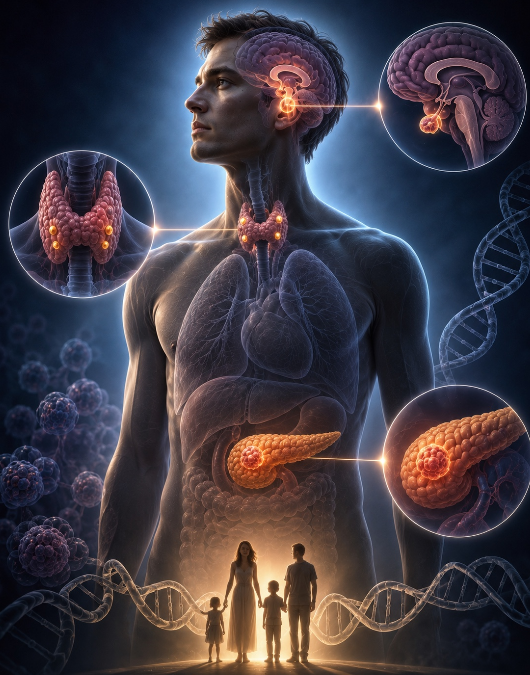
MEN syndromes, or Multiple Endocrine Neoplasia syndromes, are rare genetic conditions where tumors or overactivity can occur in more than one hormone-producing gland. They can run in families, so genetic testing and family screening are important in selected patients. MEN1 commonly affects the parathyroid glands, pituitary gland, and pancreas or gut neuroendocrine cells, causing problems such as high calcium, kidney stones, prolactinoma, infertility, acidity, ulcers, low sugar episodes, or other hormone-related symptoms.
MEN2 is usually related to changes in the RET gene. MEN2A can cause medullary thyroid cancer, pheochromocytoma, and sometimes hyperparathyroidism. MEN2B can cause medullary thyroid cancer at a young age, pheochromocytoma, mucosal neuromas, bowel problems, and a tall, slender body build. Evaluation may include hormone blood tests such as calcium, PTH, prolactin, IGF-1, gastrin, insulin, C-peptide, metanephrines, calcitonin, and genetic testing, along with ultrasound, CT, MRI, endoscopic ultrasound, or DOTATATE PET when needed.
Treatment depends on the glands involved and may include medicines, surgery, or long-term monitoring. In MEN2, pheochromocytoma must be identified and treated before thyroid surgery to avoid dangerous BP complications. MEN syndromes need lifelong follow-up because early detection and timely treatment can prevent serious complications and help patients and families stay healthy.