

Primary Hyperaldosteronism
Primary hyperaldosteronism is a hormone condition where the adrenal glands make too much aldosterone. Aldosterone helps control blood pressure and salt balance, but excess aldosterone can cause high blood pressure and sometimes low potassium. It can occur due to a small adrenal adenoma or overactivity of both adrenal glands. Some patients may have headache, tiredness, muscle weakness, cramps, excessive urination, or difficult-to-control BP, but many have no obvious symptoms. Potassium may be low or even normal, so the condition can be missed unless specifically tested. It should be suspected in patients with resistant hypertension, young-onset high BP, high BP with low potassium, adrenal nodule, or strong family history of early high BP or stroke.
Screening is usually done with blood tests called aldosterone, renin, potassium, and aldosterone-renin ratio. Some BP medicines can affect test results, so testing should be planned carefully. If screening is positive, confirmatory tests, adrenal CT scan, and sometimes adrenal vein sampling may be needed to identify whether one adrenal gland or both are causing the problem. Treatment may include adrenal surgery for selected one-sided disease or medicines such as spironolactone or eplerenone when surgery is not suitable or both glands are involved. Proper treatment can improve BP control, potassium levels, and reduce long-term risks such as heart disease, stroke, kidney disease, and atrial fibrillation. Regular follow-up is important to monitor BP, potassium, kidney function, and medicine dose.

Pheochromocytoma / Paraganglioma
Pheochromocytoma and paraganglioma are rare tumors that can produce excess adrenaline-like hormones. Pheochromocytoma usually arises from the adrenal gland, while paraganglioma can occur outside the adrenal gland. These tumors may cause sudden or repeated episodes of high blood pressure, headache, sweating, palpitations, fast heartbeat, tremors, anxiety-like attacks, weight loss, or pale skin. Some patients may have resistant or fluctuating BP, while others may be detected during a scan done for another reason.
Diagnosis usually includes blood or 24-hour urine tests for metanephrines, followed by imaging such as CT scan, MRI, MIBG scan, DOTATATE PET, or FDG PET when needed. Some patients may need genetic testing, especially if the tumor is young-onset, bilateral, extra-adrenal, recurrent, metastatic, or associated with family history.
Treatment is usually surgery, but proper preparation before surgery is very important. Medicines called alpha-blockers are used first to control BP and prevent dangerous BP spikes during surgery. Beta-blockers should be used only after adequate alpha-blockade when needed. With correct diagnosis, careful BP preparation, surgery, genetic evaluation when required, and long-term follow-up, most patients can be managed safely.

Resistant Hypertension
Resistant hypertension means blood pressure remains high despite using multiple BP medicines correctly, or BP needs several medicines to stay controlled. Before confirming resistant hypertension, it is important to check correct BP measurement, regular tablet use, salt intake, medicine timing, and home BP or 24-hour ambulatory BP monitoring.
Common causes include obesity, excess salt intake, poor sleep, stress, alcohol, smoking, kidney disease, diabetes, insulin resistance, and certain medicines such as painkillers, steroids, decongestants, oral contraceptive pills, antidepressants, and weight-loss products.
Some patients may have an underlying correctable cause. Important causes to look for include obstructive sleep apnea, renal artery stenosis, primary hyperaldosteronism, and pheochromocytoma or paraganglioma. Evaluation may include kidney function tests, urine protein, sodium, potassium, sugar, cholesterol, thyroid tests, aldosterone-renin ratio, metanephrines, kidney ultrasound, renal Doppler, CT scan, or sleep study when needed. Treatment includes salt reduction, weight loss, regular exercise, healthy diet, avoiding smoking and excess alcohol, treating sleep apnea, and using the right combination of BP medicines. Finding and treating the cause can greatly improve BP control and reduce the risk of heart disease, stroke, and kidney damage.

Addison’s Disease
Addison’s disease is a condition where the adrenal glands do not make enough important hormones, mainly cortisol and sometimes aldosterone. Cortisol helps the body handle stress, illness, blood pressure, energy, and blood sugar, while aldosterone helps maintain salt and water balance. Addison’s disease may happen due to autoimmune disease, tuberculosis, infections, adrenal surgery, bleeding, or certain medicines. Common symptoms include tiredness, weakness, weight loss, nausea, vomiting, abdominal pain, low blood pressure, dizziness, fainting, salt craving, low sugar, low sodium, high potassium, and darkening of the skin, lips, gums, scars, or skin folds. Diagnosis is done with blood tests such as morning cortisol, ACTH, sodium, potassium, glucose, renin, aldosterone, adrenal antibodies, and sometimes an ACTH stimulation test or adrenal CT scan.
Treatment is usually lifelong hormone replacement with hydrocortisone or similar steroid tablets, and some patients also need fludrocortisone. During fever, vomiting, diarrhea, surgery, injury, or severe stress, the steroid dose may need to be increased. Severe weakness, vomiting, fainting, low BP, confusion, or collapse may indicate adrenal crisis, which is a medical emergency and needs urgent injectable hydrocortisone. Patients should carry a steroid card or medical alert ID and know sick-day rules. With correct treatment, emergency precautions, and regular follow-up, most patients with Addison’s disease can live a normal active life.
Cushing’s Syndrome
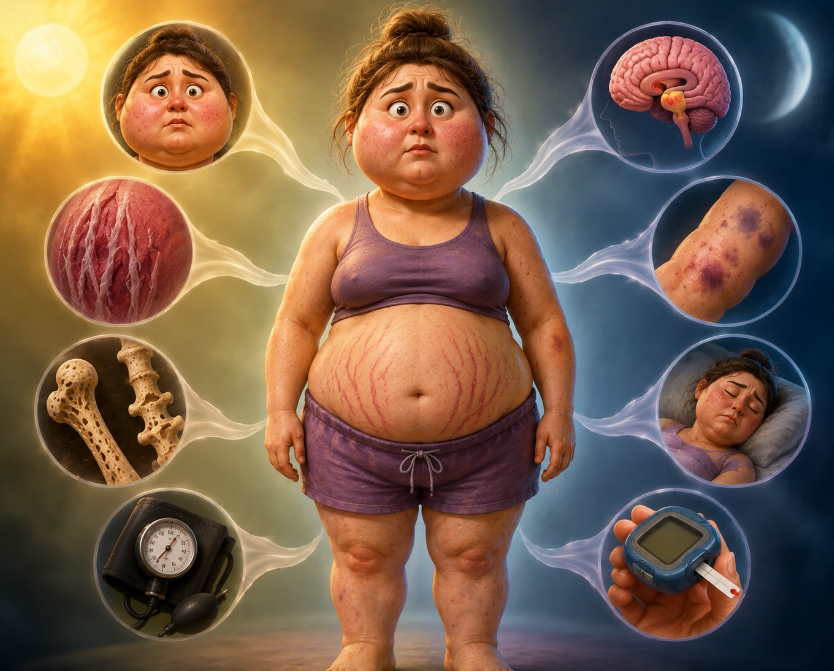
Cushing’s syndrome is a hormone disorder caused by excess cortisol in the body. It may happen due to long-term use of steroid tablets, injections, creams, or inhalers, or due to excess cortisol production from the pituitary gland, adrenal gland, or rarely other tumors. Common symptoms include weight gain around the face, neck, and abdomen, round face, fat pad at the back of the neck, purple stretch marks, thin skin, easy bruising, acne, poor wound healing, muscle weakness, tiredness, mood changes, poor sleep, irregular periods, infertility, low sexual desire, diabetes, high BP, high cholesterol, fatty liver, weak bones, fractures, and increased infection risk.
Diagnosis may include late-night salivary cortisol, 24-hour urinary free cortisol, overnight dexamethasone suppression test, ACTH level, pituitary MRI, adrenal CT scan, or specialized testing when needed. Treatment depends on the cause and may include stopping unnecessary steroids gradually under medical supervision, surgery, medicines to control cortisol, radiotherapy, or adrenal treatment in selected cases. After successful treatment, recovery may take months, and some patients may need temporary steroid replacement. With proper diagnosis, treatment, and long-term follow-up, diabetes, BP, weight, bones, mood, infections, and overall health can improve significantly.

Adrenal Incidentaloma
An adrenal incidentaloma means a small lump in the adrenal gland that is found accidentally during an ultrasound, CT scan, or MRI done for another reason. Most adrenal lumps are not cancerous and do not cause symptoms. However, every adrenal lump should be checked carefully to know whether it is making extra hormones or whether it looks suspicious on the scan.
Blood and urine tests may be needed to check hormones such as cortisol, aldosterone, renin, potassium, and metanephrines. These tests help identify hormone problems that may cause high blood pressure, low potassium, diabetes, weight gain, easy bruising, purple stretch marks, sudden BP rise, headache, sweating, or palpitations. In women with excess facial hair, acne, or irregular periods, DHEAS or other androgen tests may also be advised.
The CT scan report helps doctors understand the size and nature of the lump. Most small, harmless-looking adrenal lumps can be safely observed with follow-up. Surgery is needed only in selected cases, such as when the lump is making excess hormones, growing, large, or suspicious for cancer. With proper testing, scan review, and regular follow-up, most patients with adrenal incidentaloma can live a normal and healthy life.

Congenital Adrenal Hyperplasia
Congenital adrenal hyperplasia, or CAH, is a genetic condition where the adrenal glands cannot make certain hormones properly. The most common type is 21-hydroxylase deficiency. Because the body may not make enough cortisol and sometimes aldosterone, it may produce excess male-type hormones called androgens. CAH can appear in newborn babies, children, teenagers, or adults. Severe forms may cause vomiting, dehydration, low sodium, high potassium, shock, or ambiguous genitalia in newborn girls and need urgent treatment. In children, CAH may cause early pubic hair, fast growth, acne, body odour, early puberty, and reduced final height. In girls and women, milder or late-onset CAH may cause excess facial hair, acne, irregular periods, or infertility, and may sometimes look like PCOS.
Diagnosis is usually done with blood tests such as 17-hydroxyprogesterone, cortisol, ACTH, androgens, renin, sodium, and potassium; ACTH stimulation test or genetic testing may be needed in selected cases. Treatment depends on the type and severity. Classic CAH usually needs lifelong hydrocortisone, and some patients need fludrocortisone and salt supplementation. During fever, vomiting, surgery, injury, or severe illness, steroid doses must be increased according to sick-day rules, and emergency hydrocortisone may be life-saving. Non-classic CAH does not always need treatment unless symptoms, fertility issues, or hormone problems are significant. With correct diagnosis, regular monitoring, and proper emergency precautions, most patients with CAH can live a normal and healthy life.